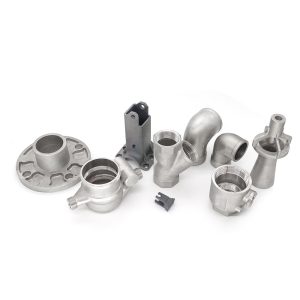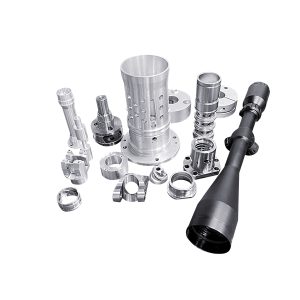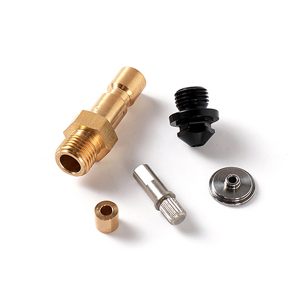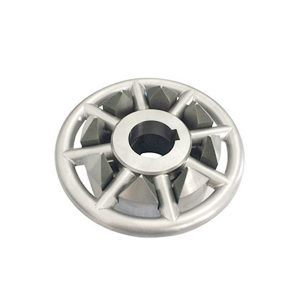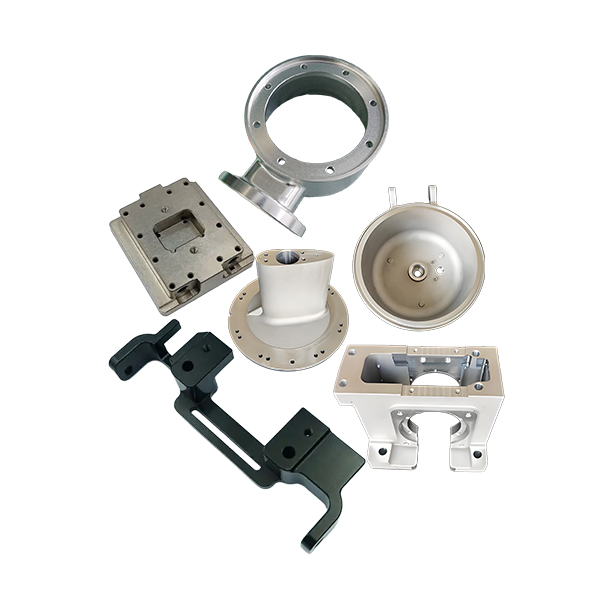
The machining of humanoid robot components must balance high precision, high rigidity, and lightweight design. This includes gear hobbing and grinding for the flexible and rigid wheels of harmonic reducers; turning and milling of motor shafts; five-axis CNC machining and topology-optimized aluminum alloy milling of skeletal structural components; ultra-precision grinding and lithography for force sensors and encoders; EDM and micro-milling of tiny parts for dexterous grippers. Strict control of surface roughness, dynamic balance, and dimensional consistency is required, often in conjunction with automated production lines and in-process inspection to ensure mass-production reliability.
| Machining Category | CNC Machining |
|---|---|
| Materials | Any Material |
| Machining Dimensions | Any Size |
| Machining Accuracy | ±0.005mm |
Focusing on lead screws, gearboxes, dexterous gripper components, and lightweight biomimetic structural parts, we leverage our micron-level machining capabilities to provide high-precision, highly consistent, and highly reliable core components for robot bodies.
The machining of key components for humanoid robots requires micron-level dimensional tolerances, sub-micron-level surface roughness, and nanometer-level surface topography. At the same time, the extensive use of slender and thin-walled components places extremely high demands on deformation control and machining stability.
| Challenges | Our Solutions |
|---|---|
| Ultra-High Precision Requirements | Core machining equipment achieves a stable ±0.002 mm (2 micrometers) precision, meeting the precision fit requirements for transmission components such as lead screws and gear reducers |
| Deformation of Thin-Walled/Slender Parts | Custom fixture solutions + optimized cutting parameters + stress-relief processes to control machining deformation |
| Multi-material machining | Comprehensive coverage of metal and non-metal materials, including aluminum alloys, magnesium alloys, titanium alloys, PEEK, and IGUS |
| Multi-process integration | Forming processes including CNC, grinding, 3D printing, die casting, injection molding, MIM, and hot pressing |
Humanoid robots consist of core components such as actuators (linear and rotary), gearboxes, dexterous hands, and structural parts, which account for up to 70% or more of the total value. Our machining capabilities cover the following core categories:
| Component Categories | Typical Products | Key Machining Requirements |
|---|---|---|
| Lead Screws | Planetary Roller Screws, Ball Screws (C3 Precision Grade) | Thread grinding and nut inner raceway grinding require over 10–20 processing steps, with P1-grade precision |
| Gear Reducers | Harmonic reducers (flexible gear/rigid gear), RV reducers, planetary reducers | High tooth profile machining precision and high technical barriers, with significant potential for domestic substitution |
| Articulation Modules | Rotary/linear actuator housings, motor housings | Multi-hole systems, sealing grooves, flatness ≤ 0.01 mm/100 mm |
| Dextroous Hand Drive Components | Micro lead screws, hollow cup motor assemblies, tendon guides | Micro-scale machining (φ0.5 mm class), fingertip precision control at the 0.1 mm level |
| Bionic structural components | Skeletal supports, housing frames, lightweight connectors | Aluminum alloy/magnesium alloy/titanium alloy machining, extreme weight optimization |
We offer end-to-end service capabilities for humanoid robot components, covering the entire process from material selection → process design → prototype manufacturing → mass production delivery:
We provide thermal management solutions for industries such as AI computing, data centers, and renewable energy. If you have any questions, would like a quote, or are interested in technical collaboration, please contact us.