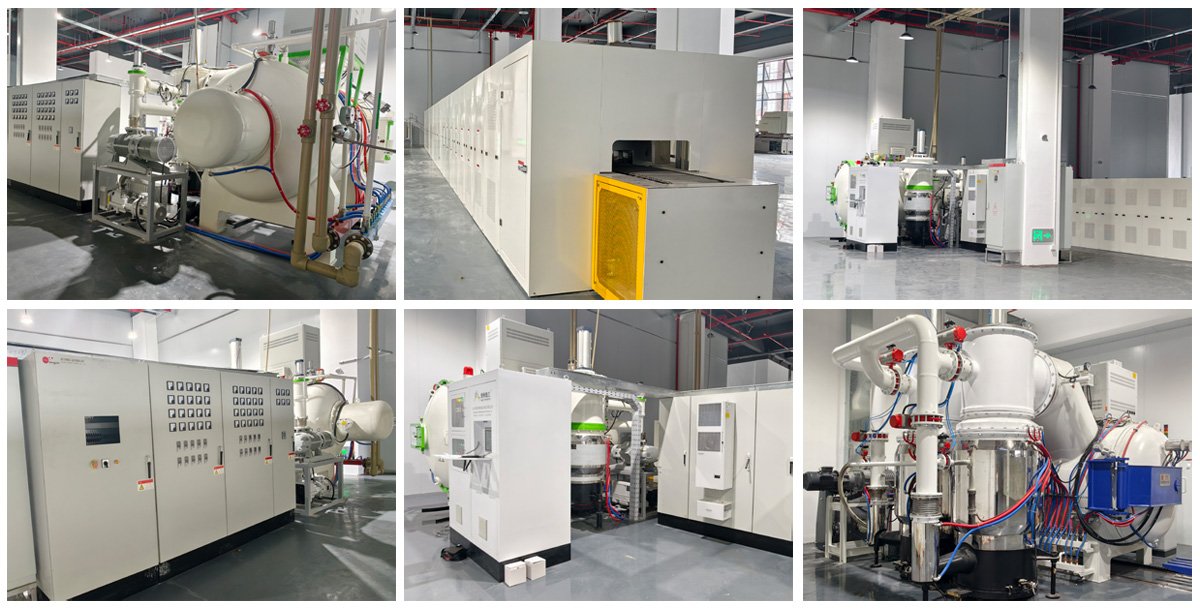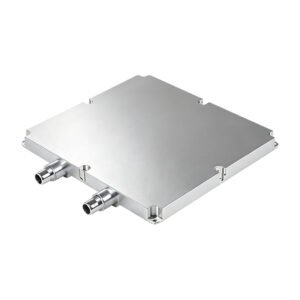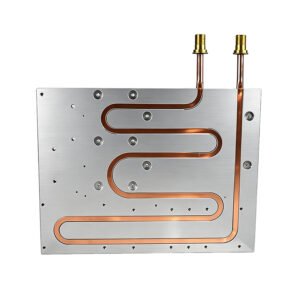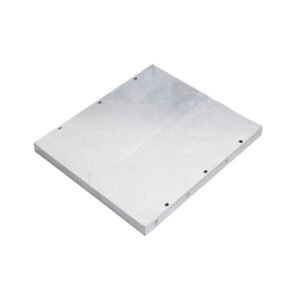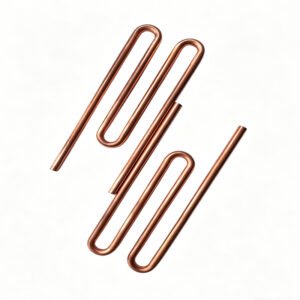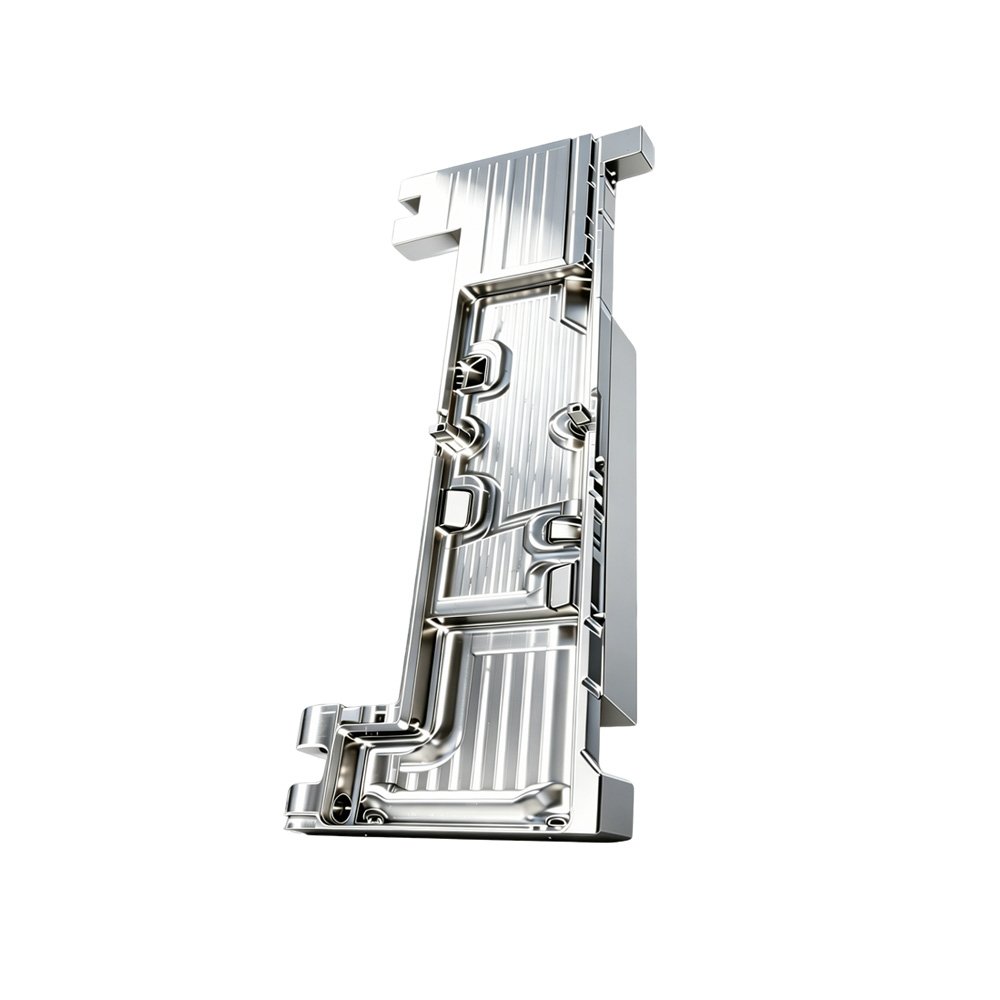
A Liquid Cold Plate is a highly efficient thermal management component. It rapidly absorbs heat from electronic components and transfers it away through coolant circulating within internal closed flow channels, achieving precise and efficient cooling of heat-generating components.
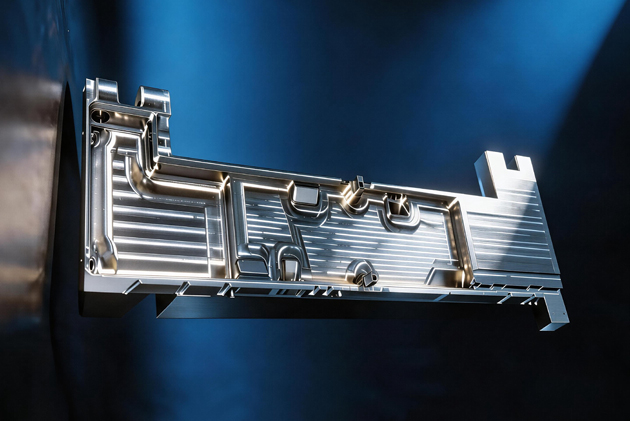
The coolant does not come into contact with components; heat is exchanged through a highly thermally conductive metal plate, balancing performance and safety.
One of the most mature liquid cooling solutions available today, widely used in new energy and industrial applications.
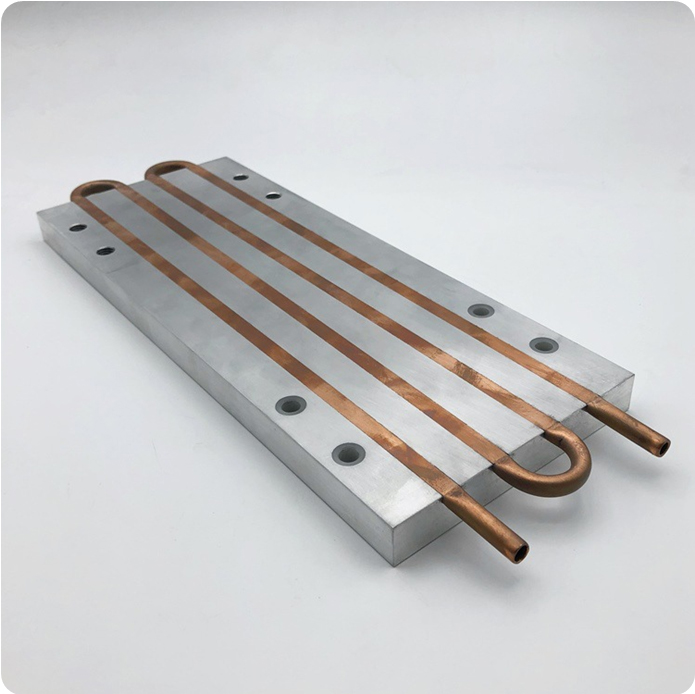
The liquid cold plate is tightly attached to the heat source, and heat is rapidly conducted to the surface of the metal substrate through thermal conduction.
The coolant inside the plate flows at high speed under differential pressure, rapidly absorbing and carrying away heat from the substrate.
The heated fluid exits the cold plate and is transported through a closed circulation loop to the outdoor heat rejection end.
The heated fluid enters an outdoor heat exchanger (such as a cooling tower), where it exchanges heat with ambient air and releases heat, cooling itself down.
The cooled low-temperature fluid is pumped back into the indoor liquid cold plate by the circulation pump, starting a new cycle of heat absorption and transfer.
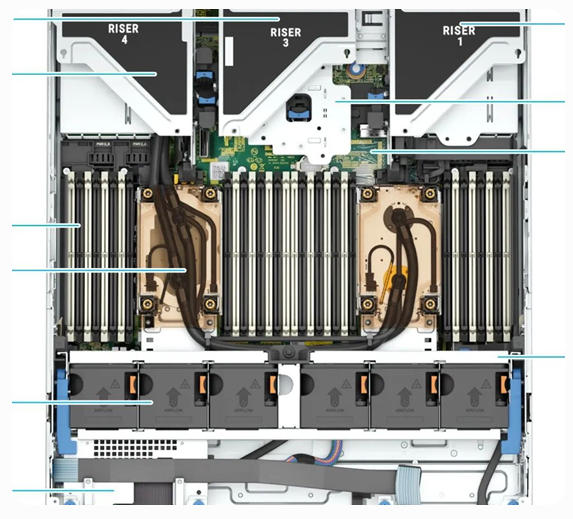
The heat capacity and thermal conductivity of liquids are far superior to those of air. Measured data shows that cooling efficiency with liquid cooling solutions is 3 times higher than traditional air cooling, rapidly removing heat generated by core components.
With the development of AI chips and HPC, single-rack power has surged from 2-3kW to 8kW or even 20kW. Air cooling has reached its physical limits, and liquid cooling, with its superior heat transfer capability, has become the only viable solution in this scenario.