
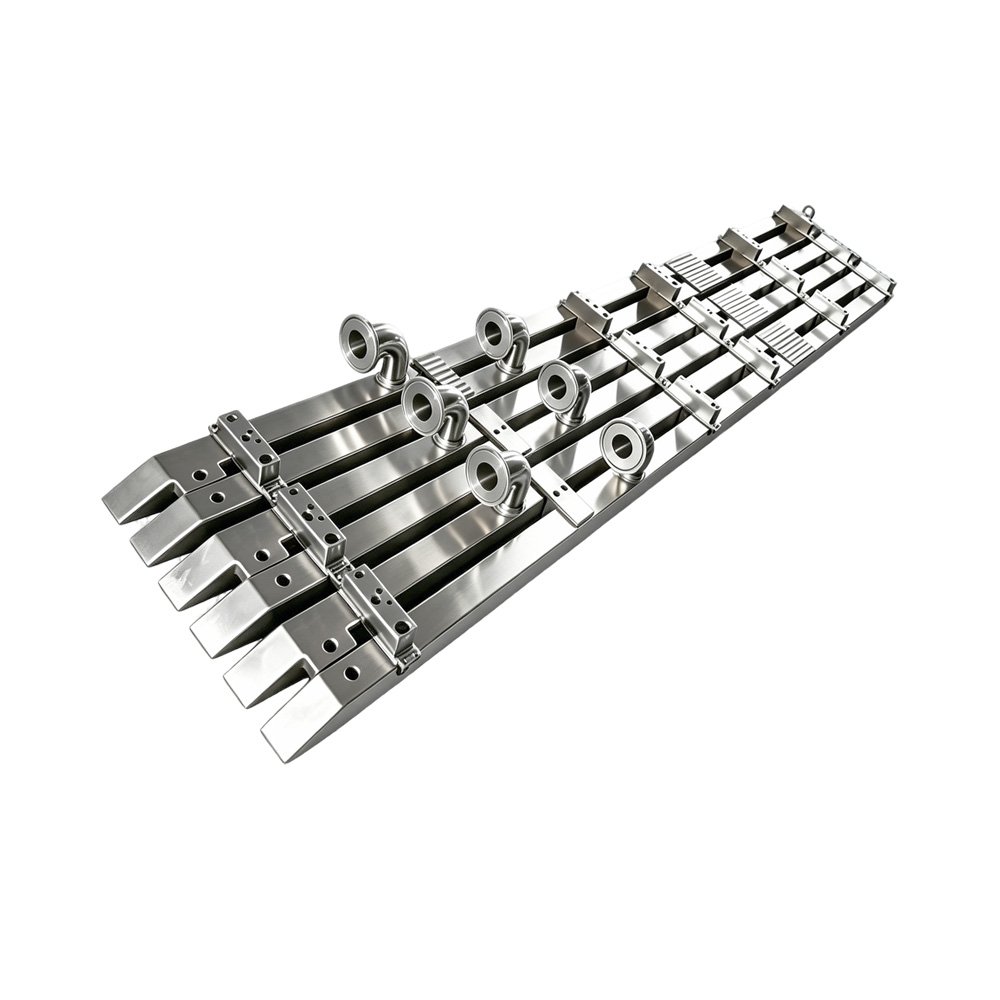
A manifold is a device used for fluid distribution and collection. Its core function is to distribute the fluid from a main supply line to multiple branch circuits as required, while simultaneously collecting return fluid from multiple branch circuits into the main return line. It is a key component for achieving precise flow control in HVAC systems.
The manifold is located at the supply end of the system, responsible for evenly distributing the fluid (such as hot or chilled water) from the heat source or cold source to each branch circuit, ensuring flow balance across all branches.
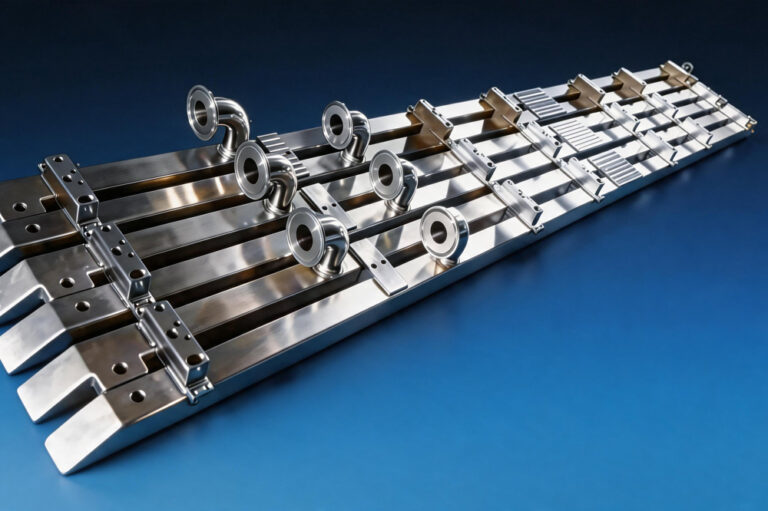
The most typical application scenario for manifolds. Evenly distributing hot water to each loop beneath the floor, providing comfortable, energy-efficient low-temperature radiant heating throughout the home.
Used to centrally connect and distribute flow to multiple radiators, enabling precise room-by-room temperature control when combined with thermostatic valves to meet different room temperature requirements.
In water-based central air conditioning systems, the manifold is responsible for efficiently distributing chilled or hot water from the chiller/boiler to the fan coil units in each room, achieving cooling or heating.
Fluid from the heat source or cold source first enters the main supply pipe of the manifold, starting the first step of the cycle.
The fluid flows through the main supply pipe and is precisely allocated to the branch pipes connecting to each room or zone through multiple branch outlets.
The fluid flows through the branch circuits, performing its intended function: releasing heat to or absorbing heat from the room, achieving the temperature control objective.
After completing the heat exchange, the fluid returns through the branch pipes to the corresponding branch inlets of the return manifold, ready for collection.
All return fluid from the branch circuits is collected in the main return pipe of the return manifold, and finally flows back to the heat source or cold source through the main return pipe, completing the closed loop.