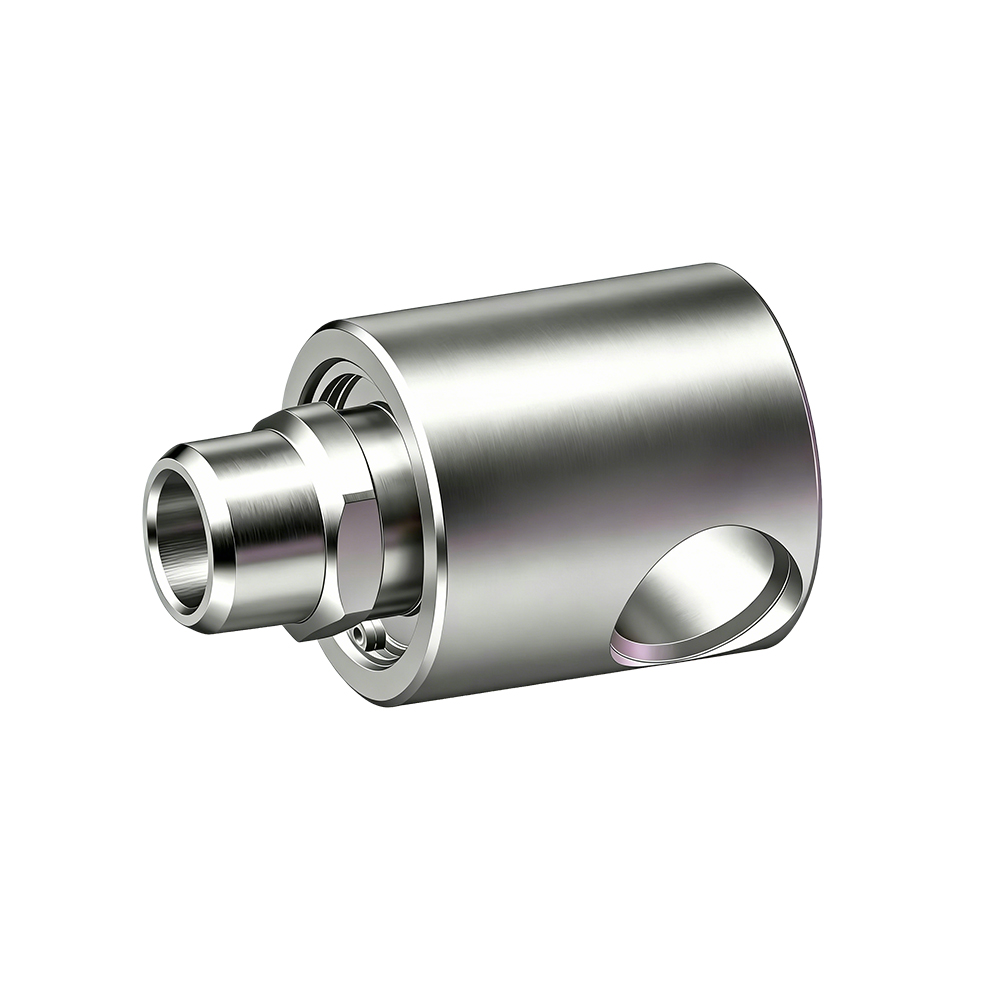
A high-pressure rotary union is a precision mechanical sealing device designed to safely and leak-free transfer high-pressure fluids—such as water, hydraulic oil, and air—between stationary piping and rotating equipment.
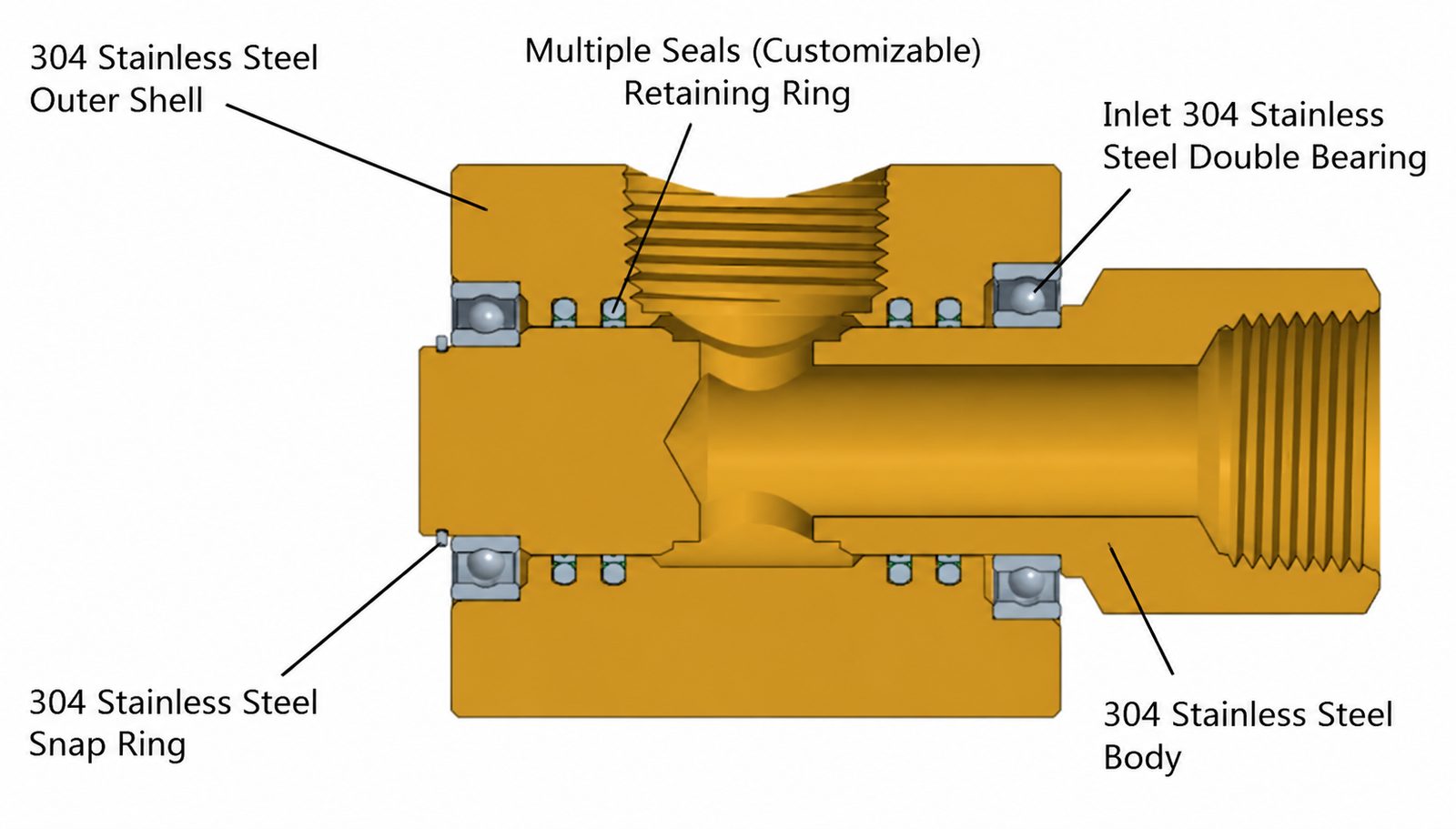
The main body of the housing is made of 304 stainless steel, offering excellent corrosion resistance and oxidation resistance, with wide application scenarios and compatibility with various flow media.
The rotary seal adopts imported high-quality wear-resistant self-lubricating materials and features a compensation function for operational wear, effectively preventing medium leakage.
The equipped multi-stage sealing rings are more wear-resistant, corrosion-resistant, and high-temperature resistant, with outstanding performance, significantly extending the overall service life of the equipment and enhancing operational stability.
Instructions for Use:
Before installation, check that the interior of the joint, sealing surfaces, and inlet/outlet diameters are free of impurities, metal chips, or debris. Piping should be thoroughly cleaned in advance to prevent hard particles from wearing the seals.
Strictly install according to the medium flow direction markings. Tighten threaded connections evenly and uniformly; do not force-lock on one side to prevent housing deformation and seal failure.
Control reasonable operating parameters: strictly prohibit operation exceeding pressure, temperature, or rated RPM limits; match the seal ring type to the corresponding fluid media, and prohibit the use of corrosive, strong solvent, or non-standard media.
Start equipment operation with a low-speed no-load trial run. After confirming no leakage or abnormal friction noise, gradually increase pressure and speed to normal operating conditions.
Ensure concentricity between the rotating end and the fixed end, avoid eccentricity, misalignment, or pipeline tensile stress, and prevent rigid torque or radial off-loading to avoid uneven seal wear and damage.
Routine Preventive Maintenance:
Daily inspection: Regularly check the joint connections for dripping, leakage, heating, abnormal vibration, and unusual noise. If slight leakage is found, investigate and address it promptly.
Regular cleaning: After prolonged use, clean impurities from the joint exterior and ports to maintain heat dissipation and surface integrity, preventing long-term adhesion of acidic/alkaline materials that may corrode the housing (304 stainless steel).
Periodic seal inspection: Depending on operating conditions (high pressure, high temperature, frequent rotation), regularly inspect the sealing pair friction surfaces. Replace worn or aged seals in a timely manner to prevent leakage.
Long-term shutdown maintenance: Drain residual media from the interior, clean and store in a dry condition; in humid environments, apply rust-preventive protection to avoid prolonged static aging and hardening of the sealing rings.
Lubrication maintenance: The self-lubricating seal structure requires no additional lubrication; for special high-speed conditions, periodically add compatible lubricating media as required to reduce rotational friction loss.
Contact Us
We provide thermal management solutions for industries such as AI computing, data centers, and renewable energy. If you have any questions, would like a quote, or are interested in technical collaboration, please contact us.